Chiyo and Satsu’s attempted escape
Memoirs of a GeishaChiyo and Satsu’s attempted escape is a turning point in Chiyo’s early life: the plan to flee the okiya together ends with Chiyo injured and captured, while Satsu escapes without her. Chiyo’s fall from the rooftops converts a carefully guarded hope of freedom into a physical injury, a debt imposed by Mother, and the loss of the sister whose fate had been her reason to keep trying.
Background and Stakes
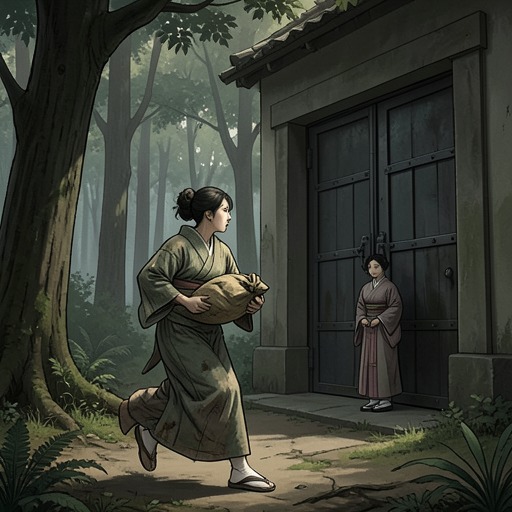
The plan takes shape under increasing confinement. Mother has ordered the front door locked after learning that Chiyo left the okiya without permission, and Auntie keeps the only key around her neck, even while she sleeps. Chiyo is no longer trusted to sit by the entrance in the evenings; that duty goes to Pumpkin, who must wake Auntie to let Hatsumomo in. These precautions shut down the ordinary route out and make escape a matter of finding another way beyond the house.
The danger is not only physical. Chiyo is already in debt to the okiya, and Mother is willing to add expenses to that account. The prospect of leaving is therefore bound to the risk of being caught and to the economic power that keeps a young girl in the household. Yet the more difficult her life becomes, the more determined Chiyo is to run. The escape plan is an attempt to act despite a system that makes departure both dangerous and costly.
Chiyo’s Rooftop Escape
On the night of the escape, Chiyo waits until she is satisfied that Mother is asleep, then changes clothes in the upstairs hallway. She has no proper shoes: with Pumpkin kneeling in the entrance hall, she cannot take the wooden shoes used in the dirt corridor, so she takes a much poorer pair from the upstairs toilet. They are too large, but she refuses to leave without footwear, a sign of how much her thinking has changed since the summer.
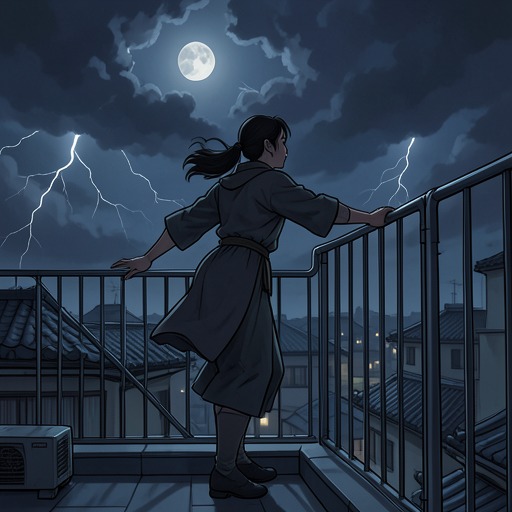
Chiyo climbs through a trapdoor and crosses the roof ridge with her sleeping robe stuffed beneath a gravity-feed tank. The tiles overlap in raised steps and clank whenever she shifts her weight, so she moves slowly, listening to the sounds echo across the neighboring roofs. She carries the oversized shoes in her hands to keep from dropping them. From the next roof she cannot see a safe route to the street; eventually she spots an open courtyard and judges that she might reach it by moving along a gutter and climbing down from a bath shed.
The route looks less dangerous than the alternatives, but it leaves Chiyo on a steep roof above the courtyard. Hearing someone below, she tries to hold herself in place as a fly might cling to a wall. She presses her toes, elbows, and knees against the tiles, then makes a desperate attempt to stop herself with her palms. Instead, she begins sliding faster. The roof gives way beneath her, and she falls through the air, landing heavily on her side and knocking herself into a daze. A woman’s astonished cry—“Good heavens! It's raining little girls!”—marks the moment the escape becomes impossible to conceal.
Capture and Punishment
Two women kneel over Chiyo, and she is carried from the moss to a wooden walkway. She cannot simply get up and run: one whole side of her body is in pain. Once Auntie takes her back into the courtyard, she makes clear that the fall has destroyed Chiyo’s chance of escape. Auntie throws her onto her stomach, pours water over her robe to make the rod sting more, and beats her so severely that she cannot draw breath. She then turns Chiyo onto her back and tells her, “You'll never be a geisha now,” insisting that nothing can be done to help her.
The punishment also reaches Pumpkin. While Chiyo hears screams farther up the walkway, Granny beats Pumpkin for failing to keep a better watch on her. The failed flight thus brings violence down on the other girl assigned to guard the entrance, extending the consequences beyond the fugitive herself. Chiyo’s attempt to break out of the household’s control instead triggers punishment within it.
What Mother Reveals
Mother itemizes the debt she will add to Chiyo’s account: the seventy-five yen she paid for her, the ruined kimono, the supposedly stolen brooch, and medical expenses for Chiyo’s broken arm. She also adds the amount owed by the mistress of the Tatsuyo in Miyagawa-cho, who had been responsible for Satsu and has now refused to pay. Mother argues that Chiyo already owes more than she can repay and that running away has made her still less attractive to anyone who might invest in her future.
This account brings the news Chiyo has been waiting for: Satsu has escaped. Chiyo had spent the day wondering what had happened to her sister, and Mother’s words settle the question. The answer offers no uncomplicated relief. Chiyo wants to feel happy for Satsu but cannot, because her sister’s freedom confirms their separation at the very moment Chiyo is injured, trapped, and facing a larger debt. The escape has divided their outcomes: Satsu is gone, while Chiyo remains under the okiya’s control.
Consequences and Significance
The event reverses Chiyo’s immediate hope of freedom. The locked entrance had already made escape seem difficult; the rooftop route appears to offer an alternative, but the fall puts her within reach of the people she meant to evade. Her broken arm is both an injury requiring treatment and a new expense that Mother can use to deepen her financial hold. Auntie’s declaration that Chiyo will never become a geisha gives the failure an additional consequence: it threatens the future Chiyo has been trying to preserve, even though Mother later describes repayment as possible if Chiyo becomes successful.
The escape also establishes a lasting contrast between the sisters’ fates. Satsu’s flight succeeds, but Chiyo learns of it only while being told that her own debt has grown beyond repayment. Their shared plan therefore ends not in a reunion outside the okiya, but in a painful separation. In the scene’s material details—the locked door, the key at Auntie’s neck, the ill-fitting shoes, the noisy roof tiles, and the medical charge—the barriers to freedom are made concrete. Chiyo’s determination survives the failure, but the immediate cost is confinement, punishment, injury, and the knowledge that Satsu is no longer beside her.